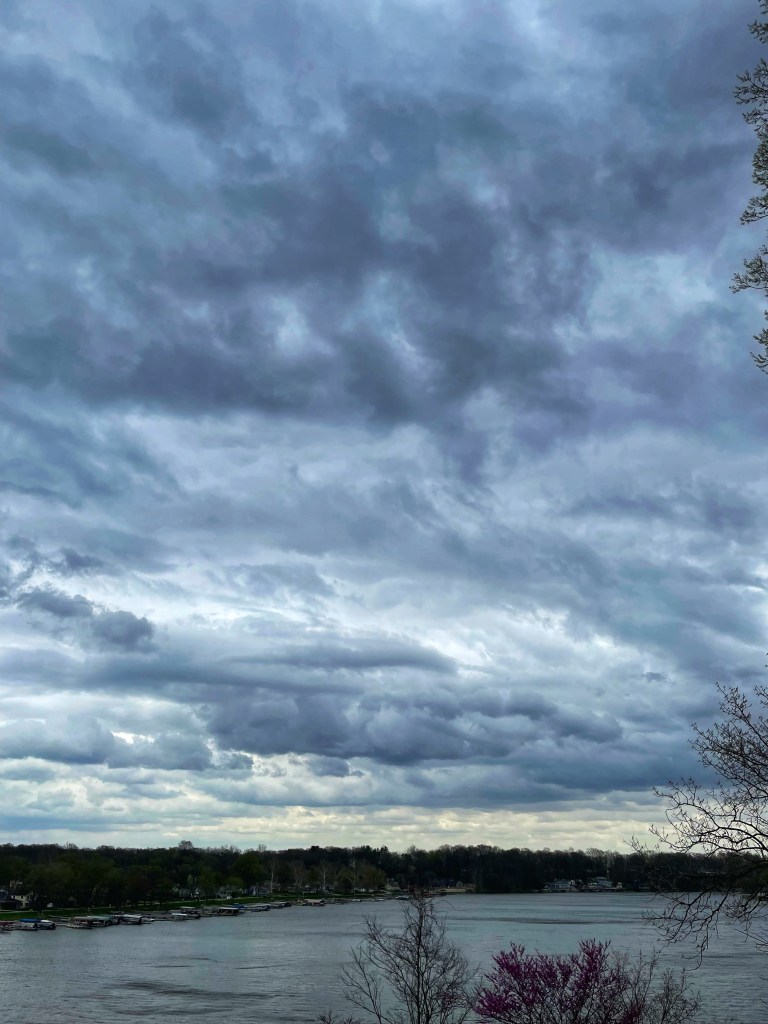
Three summers ago, we had precious little rain from late June until well into the fall. Grousing with neighbors in August on the impact to the lake level and on our ability to enjoy the lake (while waiting for a couple racks of ribs to smoke), a wise man who is a retired farmer (redundant, I know) casually said, “Is it raining in Winamac? That’s what you need to keep an eye on.”
The Tippecanoe River is over 180 miles long and is a meandering, can’t-be-rushed stroll of a stream until it finally merges into the more ambitious Wabash River. A brief summer thunderstorm over the headwaters of the Tippecanoe might provide more than a few molecules to our lake level but Winamac, only some thirty miles away, is a more reliable bellwether. Any rain that falls in Winamac is a good bet to call our lake its new home. Plus, it’s fun to say “Winamac” knowing the town’s name comes from the Potawatomi word for catfish. Rain in Winamac, catfish in our lake.
There’s something more to my neighbor’s advice, though. Looking out on our lake slowly draining can promote the very narrow perspective of I, me, mine, and now. Sure, it’s disappointing that the lake is down but it’s not the first time and won’t be the last. Monitoring the weather in Winamac points us to the bigger picture of the ecosystem flowing through our back yard and encourages us to consider where we fit in the great scheme of things.
The Tippecanoe is a living, flowing thing and we all live downstream of systems within systems within systems that are all bigger than ourselves. And our lives, in turn, are contributories to the flow to future generations. Maybe this plays into the findings of a recent study that concluded people living next to water may live longer lives. Maybe water as a backdrop to day-to-day life is a constant reminder of living both downstream and upstream of conditions, people, events, triumphs, catastrophes, and epochs, subliminally reenforcing that peace that comes from being part of the life-giving flow. Cue the orchestra for Smetana’s The Moldau.
All that sounds very calming and zen-ish, but it comes from standing back from the river to gain aesthetic distance, abstracting it into a metaphor. The closer you get to the flowing river, however, the more turbulent it becomes. There’s nothing placid about the river below the dam or of flood waters rushing beyond the river’s banks, seemingly searching for things to destroy. There the water is chaotic, unpredictable, its movement is intense, incoherent, destructive. Some geological formations previously thought to have been wrought by centuries of the persistent flow of rivers are now believed to have been created nearly overnight by cataclysmic floods caused by the breaking of ice dams holding back massive glacial lakes. A natural event violent enough to carve cliffs into mountainsides and sweep away massive deposits of soil to create vast plains is a very different characteristic of water, one difficult for us to even imagine possible.
Watching the lake level drop from drought is only part of the picture. The hydroelectric dam that created our lake in the 1920s is operated on a “run-of-river” basis. According to NIPSCO.com, “In other words, water flowing through the dams is matched as close as possible to the water flowing into the dams. These facilities are not flood control dams.” Water in, water out.
However, that summer there was very little water coming in, but there was still water going out, so the lake level continued to drop. Why? The operating authority for the hydroelectric dams must comply with directives from the U.S. Fish and Wildlife Service which enforces the Endangered Species Act. The Tippecanoe River “supports more numerous imperiled species and overall species diversity than most streams of the upper Midwest. The Nature Conservancy has identified it as one of the top ten rivers in the United States to preserve due to its ecological diversity and the high proportion of endangered species found in it,” according to Wikipedia.
The lake was being drained to sustain the lives of endangered species downstream. Systems within systems within systems and, as we used to say in corporate I.T., when systems fail, they tend to fail at the interfaces. Our lake is at that interface. We live both downstream and upstream of conditions, people, events, triumphs, catastrophes, and epochs.
We can sit back, waiting for the ribs to finish smoking, and fret over how unfair it is to see our boat, in its lift, right where we left it the last time we took a boat ride, now a good eight feet in the air off the dry bottom of the lake. I, me, mine, now. Or, as we watch the sun rise over the gently moving lake, we can consider how the flow of water can also level mountains, turn foothills to high plains, and reduce civilizations to scraps and legends.
The ancients always seem to get it right: “No man ever steps in the same river twice, for it’s not the same river and he’s not the same man.” It’s spring now, with the promise for a summer filled with fun on the lake, but I’m already checking my weather apps for conditions upstream. Given the current state of the world beyond the river in our backyard, shouldn’t we all be asking ourselves, “Is it raining in Winamac?”
 What Then?